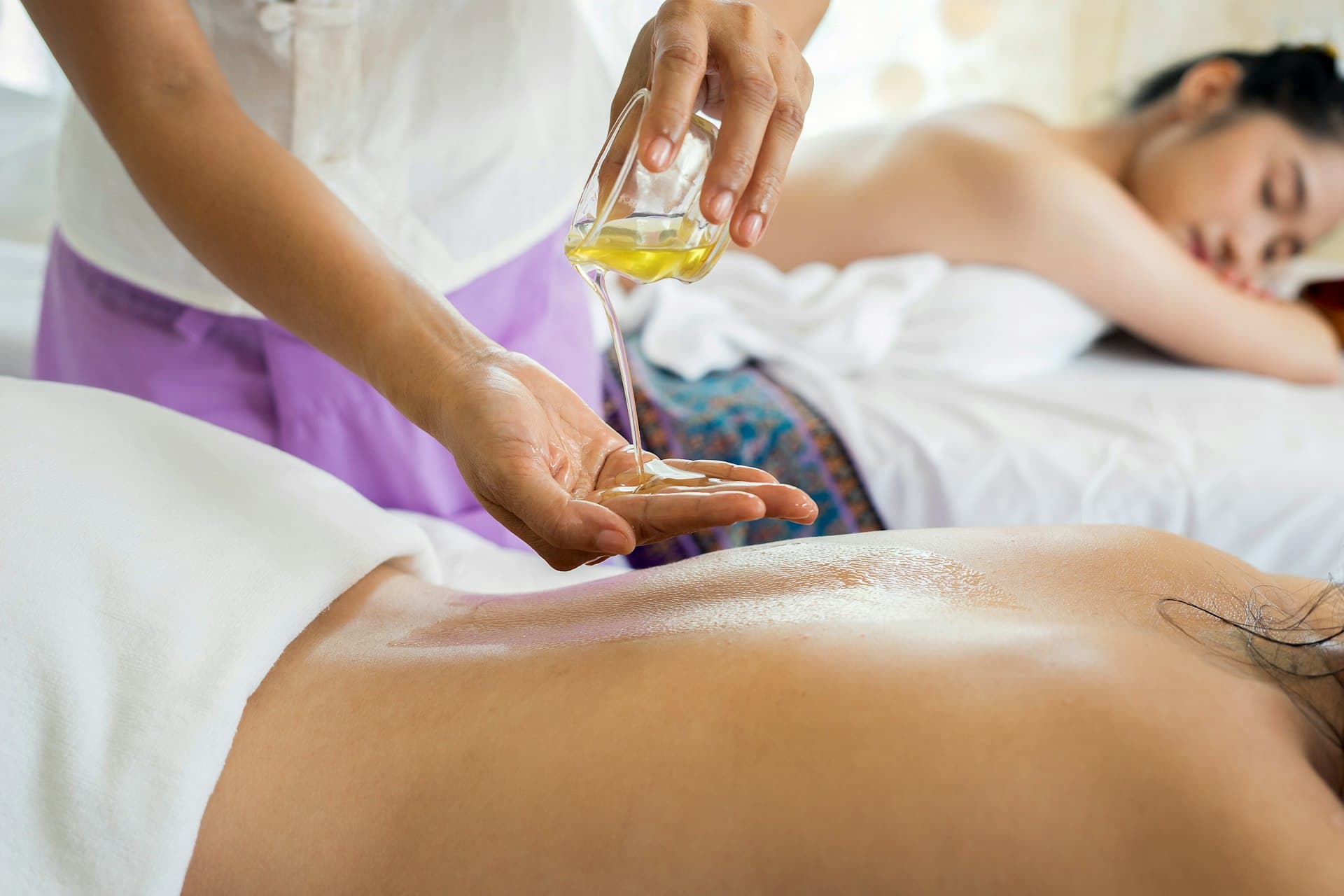
The Art of Four Hands Massage: Synchronized Luxury in Private Settings
Four hands massage is a specialized treatment modality in which two therapists work simultaneously on one recipient, coordinating their movements in choreographed synchronization to create a sensory experience that transcends what any single therapist can achieve alone. Luxury Spa Therapists places exceptional therapist pairs vetted for both individual technique mastery and the rare ability to work in true unison—a skill that elevates this treatment from a novelty into something profoundly therapeutic.
In a private setting—whether a personal residence or a seasonal villa—four hands massage reaches its full potential. The absence of time constraints, the familiarity of your own environment, and the complete privacy of the space allow both therapists and recipient to settle into a depth of focus rarely possible in a commercial spa. There are no adjacent treatment rooms, no background chatter, no awareness of a schedule beyond your own.
This is massage not as a service, but as an immersion.
How Synchronization Works
The defining element of four hands massage is synchronization, and understanding how it operates reveals why this treatment produces such distinctive effects on the body and mind.
When two therapists mirror each other's movements—one working the left shoulder blade while the other addresses the right, both applying identical pressure at identical speed—the brain receives symmetrical sensory input. This bilateral stimulation has a measurable effect on the nervous system. The brain, receiving coherent signals from both sides of the body simultaneously, shifts more readily into parasympathetic dominance: the physiological state associated with deep rest, tissue repair, and mental clarity.
In practice, the choreography is subtle and precise. The therapists communicate through touch—one leads, the other follows, and these roles shift fluidly throughout the session. When one therapist pauses to reposition their hands, the other maintains continuous contact, ensuring the recipient never experiences a break in the therapeutic connection. The transitions are seamless, almost invisible.
The Mirror Technique
The most common approach begins with both therapists positioned on opposite sides of the treatment table, performing identical strokes in mirror image. Long effleurage strokes down the back, for example, are applied simultaneously from the neck to the lower back, with both therapists maintaining the same speed, depth, and rhythm. The effect is a sensation of being held and addressed as a whole body, rather than a collection of individual regions.
Complementary Technique
As the session progresses, the therapists may shift to complementary rather than mirrored movements. One therapist might work the deep muscles of the back while the other addresses the legs. This approach covers more territory in less time, but more importantly, it prevents the mind from tracking individual hands. When four hands move independently across the body, the brain's attempt to follow each point of contact eventually gives way—producing a distinctive cognitive surrender that many recipients describe as the closest they have come to meditation without effort.
The Wave Pattern
In the wave pattern, one therapist initiates a stroke and the other follows a half-beat later, creating a rolling sensation across the body. This technique is particularly effective along the spine, where sequential pressure along the paraspinal muscles mimics the rhythmic motion of a wave. It draws from principles found in Balinese massage, where flowing, continuous strokes are fundamental to the modality.
Why Four Hands Massage Differs from Single-Therapist Treatment
The difference is not simply twice the hands. It is a qualitatively different experience that affects the body through mechanisms that a single therapist, regardless of skill, cannot replicate.
Cognitive overload and release. The human brain is remarkably skilled at tracking two points of contact—your awareness can follow two hands moving across your back with relative ease, and that awareness maintains a degree of cognitive engagement. Four points of contact exceed this tracking capacity. Within the first minutes of a four hands session, most recipients experience a distinct moment of letting go: the mind stops trying to follow and simply receives.
Deeper muscular access. While one therapist stabilizes a muscle group, the other can work more deeply into specific fibers with greater precision. This collaborative approach allows for targeted deep tissue work that might be uncomfortable from a single therapist applying the same pressure without stabilization from a second pair of hands.
Time efficiency with greater depth. A 90-minute four hands session provides the equivalent coverage of a significantly longer single-therapist treatment, but the benefit is not merely efficiency. Because more of the body receives attention simultaneously, the nervous system's response is more comprehensive and more uniform. There are no neglected regions creating contrast with treated areas.
Emotional and psychological impact. Being cared for by two professionals simultaneously—in silence, with complete focus on your wellbeing—produces a psychological effect that many recipients find deeply moving. It is an experience of being thoroughly attended to, and in the context of a private home where the environment is already safe and familiar, this emotional dimension is amplified.
Ideal Settings for Four Hands Massage
Four hands massage requires more space than a standard single-therapist treatment, and the setting matters more than it might for simpler modalities. Both therapists need unobstructed access to the full length of the treatment table, with room to move fluidly around it without bumping into furniture, walls, or each other.
In a Private Residence
A room with at least fifteen square meters of clear floor space around the treatment table is ideal. The master suite, a dedicated wellness room, or a spacious guest bedroom typically works well. Our guide to private residence wellness covers room preparation in comprehensive detail, including temperature, lighting, and atmospheric considerations that apply to all home-based treatments.
The advantage of a private residence is the ability to control every environmental variable. You set the temperature. You choose the silence or the sound. You determine who else is in the home and whether the treatment happens at dawn, midday, or midnight. For a treatment as immersive as four hands massage, this level of control directly enhances the outcome.
In a Villa Setting
Villas—particularly those in warm climates—offer the additional possibility of outdoor four hands treatments. A shaded terrace, a poolside pavilion, or a garden alcove can serve as extraordinary treatment spaces when the weather cooperates. The combination of synchronized bodywork, natural light, and the ambient sounds of the environment creates a multi-sensory experience that enclosed spaces cannot replicate.
Our villa placement services include guidance on identifying and preparing outdoor treatment areas, ensuring that privacy, shade, and surface stability are addressed before the session begins.
On a Superyacht
Four hands massage on a superyacht is possible but requires careful consideration of space constraints and vessel motion. The treatment is best performed at anchor, in calm conditions, within a dedicated spa area or on a stable deck section. Our article on designing superyacht spa spaces discusses how to create environments that support advanced treatment modalities in maritime settings.
Preparing for Your Four Hands Session
Preparation for four hands massage follows similar principles to any private treatment, with a few additional considerations.
Hydration. The intensity of bilateral stimulation accelerates circulation and lymphatic movement. Drink water in the hours before your session—not immediately before, which can cause discomfort during prone positioning, but steadily throughout the morning or afternoon preceding the appointment.
Meal timing. Allow at least ninety minutes between your last meal and the treatment. Four hands massage involves more comprehensive pressure across the torso and abdomen than many single-therapist treatments, and a full stomach detracts from the experience.
Communication beforehand. If this is your first four hands session, discuss your expectations with the lead therapist in advance. Mention any areas of particular tension or sensitivity, your preferred pressure level, and whether you prefer the session to emphasize relaxation or therapeutic depth. Both therapists will calibrate their approach accordingly.
Post-session rest. Plan for at least thirty minutes of quiet rest following the treatment. The depth of nervous system response to four hands work often produces a state of profound relaxation that takes time to transition out of. Rushing into activity immediately afterward diminishes the lasting benefit.
What to Expect During the Treatment
A four hands session typically begins with both therapists at the head and foot of the table, establishing initial contact simultaneously. This first touch sets the tone: you feel four hands arrive at once, and the brain's adjustment begins immediately.
The session then follows a choreographed sequence that moves through the major muscle groups. Back, shoulders, and neck are addressed first, with one therapist working the upper body while the other addresses the lower back and gluteal muscles. The transition to the legs is seamless—as one therapist completes work on the back, they shift downward while the other maintains continuity on the upper body.
When you turn from prone to supine position, the therapists provide discreet draping and allow you a moment to settle. The anterior work—chest (over draping), arms, abdomen, legs, and feet—is often where the complementary technique dominates, with each therapist taking responsibility for one side of the body.
The session concludes with both therapists returning to mirror technique, often incorporating gentle cranial holds or synchronized foot pressure that signals the body to gradually return to full awareness.
The choice of oils also contributes to the experience. Many therapists select oils with properties that support the treatment's objectives—warming blends for deep muscular work, cooling formulations for recovery-focused sessions. Our guide to selecting the ideal massage oil explores how different oils complement different modalities.
Duration and Intensity
Four hands massage is offered in 60-minute and 90-minute formats, with intensity fully customizable to your preference.
A 60-minute session provides a comprehensive full-body treatment that covers all major muscle groups. Given that two therapists are working simultaneously, the coverage achieved in this timeframe is substantial. This duration is well-suited to regular weekly sessions as part of an ongoing private wellness program.
A 90-minute session allows for deeper focus on areas of particular tension while still providing full-body coverage. The additional time also permits longer sequences of the wave and complementary techniques that produce the treatment's most distinctive effects. For a first four hands experience, the 90-minute format is recommended—it allows both you and the therapists to find rhythm without the constraint of a compressed schedule.
Intensity ranges from gentle, flowing work focused on relaxation and nervous system regulation to firm, targeted deep tissue application. Most recipients discover that moderate-to-firm pressure in a four hands context feels different from the same pressure applied by a single therapist: the bilateral stimulation alters perception, making firm work feel integrated rather than intense.
View our complete treatment menu for details on all available modalities, or explore our pricing structure for placement investment details.
Finding Two Therapists Who Work as One
The greatest challenge of four hands massage is not logistical but human. Finding two therapists who can genuinely synchronize—who share an intuitive understanding of rhythm, pressure, and spatial awareness—is far more difficult than finding two individually excellent practitioners.
Our vetting process evaluates therapist pairs specifically for their collaborative ability. This goes beyond technical compatibility; it encompasses temperament, work ethic, and the subtle interpersonal chemistry that allows two professionals to communicate through touch alone. Our selection standards are rigorous precisely because in a four hands context, any disconnect between the therapists is immediately perceptible to the recipient.
When the match is right, the result is something neither therapist could produce alone. The synchronized treatment becomes its own entity—greater than the sum of its parts, and available nowhere else with such precision.
Schedule a confidential assessment through our contact page to discuss four hands placement for your residence or villa.
Frequently Asked Questions
What is four hands massage and how does it differ from a regular massage?
Four hands massage involves two therapists working on your body simultaneously in coordinated synchronization. Unlike a standard single-therapist treatment, the bilateral stimulation overwhelms the brain's ability to track individual touch points, producing a distinctive cognitive release and deeper relaxation. The experience is qualitatively different—not simply a doubled version of a regular massage session.
Do both therapists need to have the same skill level?
Both therapists should demonstrate equivalent technical proficiency, but their roles may differ slightly during the session. One typically leads while the other follows, and these roles alternate fluidly. Our placement process evaluates pairs specifically for their collaborative ability and ensures both meet our seven selection standards.
How much space is needed for a four hands treatment at home?
A treatment room with approximately fifteen square meters of clear space around the table is ideal. Both therapists need unobstructed access to all sides of the table with room to move without constraint. A spacious bedroom, living area, or dedicated wellness room in your private residence typically works well.
Is four hands massage more intense than a single-therapist session?
Not necessarily. Intensity is fully customizable. Many recipients find that the bilateral stimulation actually makes firm pressure feel more integrated and less acute than the same pressure from a single therapist. The experience can range from deeply relaxing to therapeutically intense, depending on your preference and the therapists' approach.
How long should my first four hands session be?
We recommend 90 minutes for your first experience. This duration allows the therapists to move through all three synchronization techniques—mirror, complementary, and wave—without rushing, and gives your body time to fully settle into the unfamiliar bilateral stimulation.
Can four hands massage be combined with other treatments?
Yes. Four hands massage pairs well with hot stones for added warmth and depth, or can be followed by a facial treatment or reflexology session for a comprehensive wellness experience. Discuss your preferences during the initial consultation to design a session that addresses your specific goals.
Is four hands massage available for villa placements?
Absolutely. Our villa placement services include therapist pairs trained in synchronized techniques. Villa settings often provide the additional space and environmental options—such as outdoor terraces—that make four hands massage especially memorable.
What is the investment for placing a four hands therapist team?
Four hands placement follows our standard pricing structure, with the process tailored to identify a compatible therapist pair rather than an individual. The two-stage investment covers the confidential assessment, curated shortlist of matched pairs, private trial sessions, and comprehensive onboarding for both therapists.
To explore four hands massage placement for your private residence or villa, contact us or connect via WhatsApp at +9613880808.
Connect with our placement team to request a private introduction.