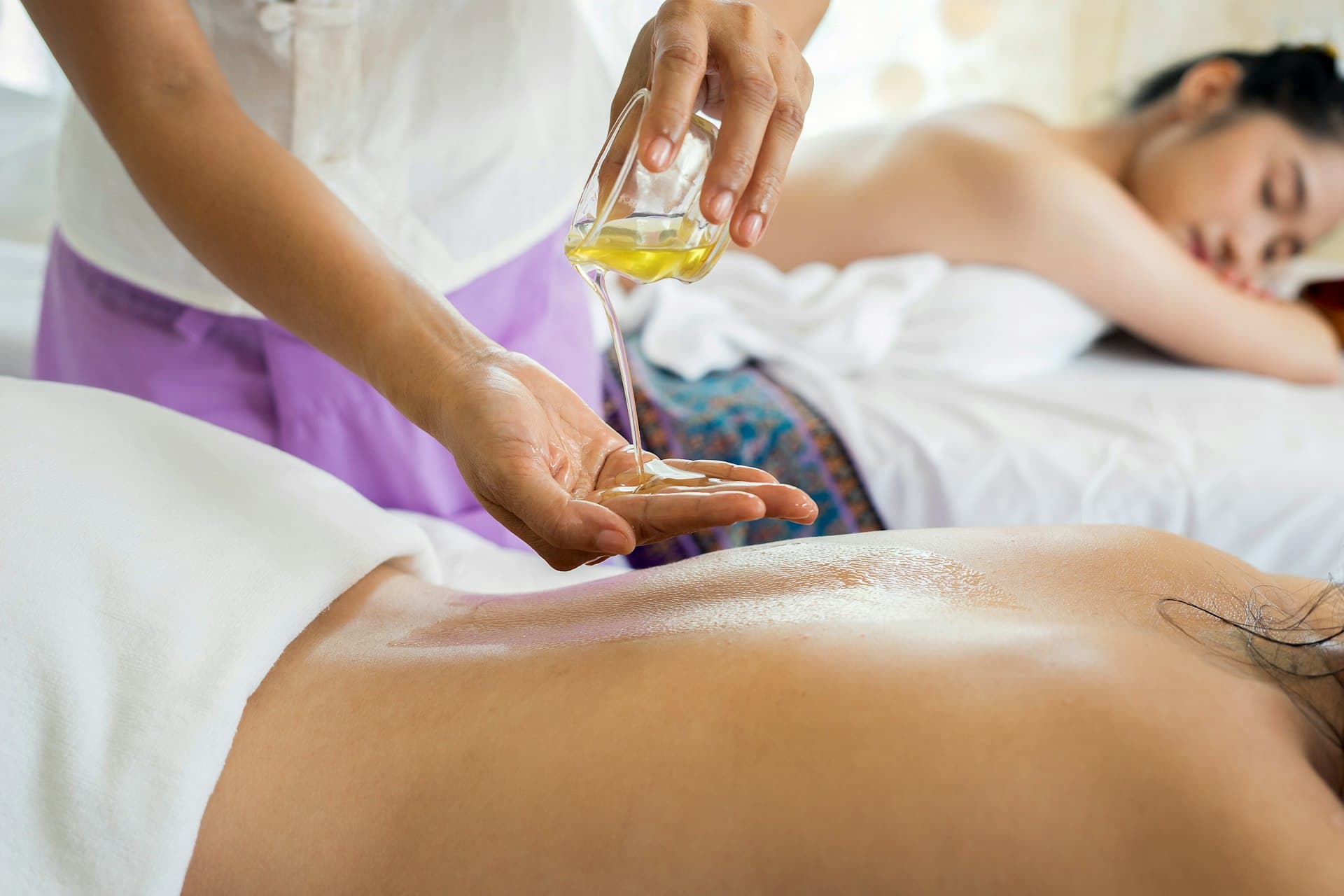
Thai Massage in Private Settings: Adapting Ancient Practice to Modern Luxury
Thai massage is a therapeutic tradition rooted in over two thousand years of practice, combining passive stretching, joint mobilization, and rhythmic compression along the body's energy lines. Unlike table-based modalities, traditional Thai massage is performed on a padded floor mat, with the recipient fully clothed, allowing the therapist to use their entire body — hands, elbows, knees, and feet — to guide the client through a sequence of positions that open the joints and release deeply held tension. Luxury Spa Therapists introduces therapists trained in authentic Thai techniques who understand how to adapt this ancient practice to the particular demands of private residences, villas, and other intimate settings.
In a spa environment, Thai massage follows a set routine in a purpose-built room. In a private home, the therapist must consider room dimensions, flooring, noise levels, and the client's familiarity with a modality that feels quite different from conventional massage. This adaptation is where the quality of the therapist becomes apparent.
How Thai Massage Differs from Table-Based Treatments
Most Western massage modalities — deep tissue, Balinese, hot stones — involve the client lying passively on a table while the therapist applies manual pressure. Thai massage inverts this dynamic. The client is an active participant, moved through positions that resemble assisted yoga while the therapist applies precise compression along muscle groups and energy pathways.
This collaborative quality makes Thai massage particularly effective for clients who feel restless during passive treatments or who seek both flexibility improvement and muscular release in a single session. It is also a strong complement to other modalities — many clients alternate between Thai sessions and table-based treatments like Balinese massage throughout the week.
Adapting to Private Spaces
Floor Space and Setup
Thai massage requires a clear floor area of approximately three by two meters. In a private residence, this might be a dedicated wellness room, a cleared section of a bedroom, or even a sheltered outdoor terrace at a villa property. The therapist brings a professional-grade Thai mat and any bolsters or blocks needed for positional support.
For homes without a dedicated treatment space, an experienced therapist will assess the available rooms during the trial session and recommend the most suitable location based on privacy, acoustics, and ambient light.
Clothing and Comfort
Unlike oil-based treatments, Thai massage is performed through loose, comfortable clothing. This distinction matters in a private home setting — there is no need for draping, oil cleanup, or post-session showers. Clients who value convenience or who prefer not to disrobe find Thai massage particularly appealing.
The therapist typically provides appropriate clothing options or advises the client beforehand. This small logistical detail, handled well, sets the tone for a session that feels both professional and effortless.
Sound and Environment
Thai massage sessions benefit from a quiet environment. The stretching and compression sequences require communication between therapist and client — subtle verbal cues and physical feedback that guide the depth and pace of each movement. In a private setting, the therapist can control the environment far more precisely than in a shared spa, creating conditions for a more focused and effective treatment.
The Treatment Sequence
A full Thai massage session typically lasts 90 to 120 minutes, though 60-minute sessions focusing on specific areas are common in residential settings. The treatment generally follows a structured progression.
The session begins with the client lying supine while the therapist works the feet, legs, and hips through a series of compressions and stretches. This lower-body sequence alone can take 30 to 40 minutes in a full session, as the legs and hips hold significant tension for most people.
The therapist then moves to the arms, shoulders, and back, often repositioning the client into seated or side-lying positions. The final portion addresses the neck, head, and face — areas where accumulated stress manifests as tightness and restricted range of motion.
Throughout, the therapist maintains a rhythmic pace, using their body weight rather than muscular force to generate pressure. This technique allows for deep, sustained compression without the fatigue that limits many table-based practitioners.
Who Benefits Most from Thai Massage at Home
Thai massage in a private setting suits several profiles particularly well.
Clients who maintain active lifestyles — those who ski, play tennis, practice yoga, or train regularly — find that Thai massage supports recovery and flexibility in ways that complement their existing routines. The assisted stretching component addresses range-of-motion limitations that static stretching alone cannot resolve.
Clients who travel frequently benefit from Thai massage as a counterpoint to long flights and sedentary periods. The full-body mobilization helps restore circulation and ease the physical effects of jet lag and travel fatigue.
Clients who are new to massage or uncomfortable with disrobing often find Thai massage an approachable entry point. The clothed format and collaborative nature create a sense of agency that traditional table massage does not always provide.
Intensity and Customization
Thai massage is classified as firm to deep in intensity, but this is not fixed. A skilled therapist adjusts the depth of compression, the range of stretches, and the pace of the session to match the client's condition and preferences. During the initial consultation, pressure preferences are discussed in detail, and the therapist calibrates accordingly from the first session.
For clients who prefer a gentler approach, Thai massage can be performed with lighter compression and smaller range-of-motion stretches, retaining the modality's distinctive character while respecting physical limitations or personal comfort.
Combining Thai Massage with Other Modalities
In a private residence with a dedicated therapist, Thai massage often serves as one element of a broader wellness program. A weekly rotation might include Thai massage for flexibility and energy, deep tissue work for targeted muscle recovery, and reflexology for focused relaxation.
For villa placements hosting guests with varied preferences, a therapist trained in both Thai and oil-based modalities offers versatility. This dual capability is something we specifically evaluate during our selection process, as it significantly increases the therapist's value in a multi-guest environment.
Finding a Thai Massage Specialist for Your Home
Authentic Thai massage requires specific training beyond standard massage certification. Our vetting process verifies that therapists presenting Thai as a specialty have trained at recognized institutions and have substantial experience performing the modality in private, non-clinical settings.
The difference between a therapist who has completed a brief Thai massage module and one who has studied the art extensively is immediately apparent in the fluidity of transitions, the precision of compressions, and the confidence with which they guide the client through complex positions.
To discuss placing a Thai massage specialist in your residence or villa, reach out through our contact page or connect directly via WhatsApp. Every consultation is confidential, and the process begins with understanding your specific preferences and environment.
To explore Thai massage placement for your private residence or villa, contact us or connect via WhatsApp at +9613880808.
Frequently Asked Questions
Is Thai massage suitable for someone who has never had any form of bodywork?
Yes. Thai massage is often an excellent introduction to therapeutic bodywork because the client remains clothed and the treatment feels collaborative rather than passive. A skilled therapist will begin gently, gauging flexibility and comfort before progressing to deeper stretches. The trial session provides an ideal opportunity to experience this before committing to a regular schedule.
How much space does Thai massage require in a home?
A clear floor area of approximately three by two meters is sufficient. The therapist provides a professional mat and any necessary bolsters. Many clients dedicate a quiet room or section of their home, though the treatment can also be performed on a covered terrace or garden pavilion at a villa property.
Can Thai massage be combined with oil-based treatments in the same session?
Some therapists offer hybrid sessions that begin with Thai stretching and transition to oil-based massage on a table. This combination can be particularly effective, but it requires a therapist trained in both disciplines. We identify these dual-skilled therapists during our selection process.
How does the intensity compare to deep tissue massage?
Thai massage uses sustained body-weight compression rather than focused finger or elbow pressure. The sensation is broad and rhythmic rather than pinpointed. Many clients find it deeply intense in the stretching components while experiencing the compression as firm but comfortable. Intensity is always calibrated to the individual's tolerance and goals.
What should I wear during a Thai massage session?
Loose, comfortable clothing that allows full range of movement — similar to what you might wear for yoga or stretching. Avoid jeans, belts, or restrictive fabrics. Your therapist can advise on suitable options before the first session.
How often should Thai massage be scheduled in a private wellness program?
For active individuals seeking flexibility and recovery support, one to two sessions per week is common. For those using Thai massage as part of a broader treatment rotation, once weekly complements other modalities well. Your therapist will recommend a cadence based on your goals and physical condition.
Is Thai massage appropriate for older clients or those with mobility limitations?
Absolutely. Skilled Thai massage practitioners adapt the treatment to the client's range of motion, avoiding positions that cause discomfort and using props for support. The gentle variation of Thai massage can be deeply therapeutic for clients with stiffness or reduced flexibility, provided the therapist is experienced in working with varied physical capabilities.
For a confidential consultation about Thai massage placement in your home, contact us or connect via WhatsApp at +9613880808.
Request a private introduction to begin your therapist search.