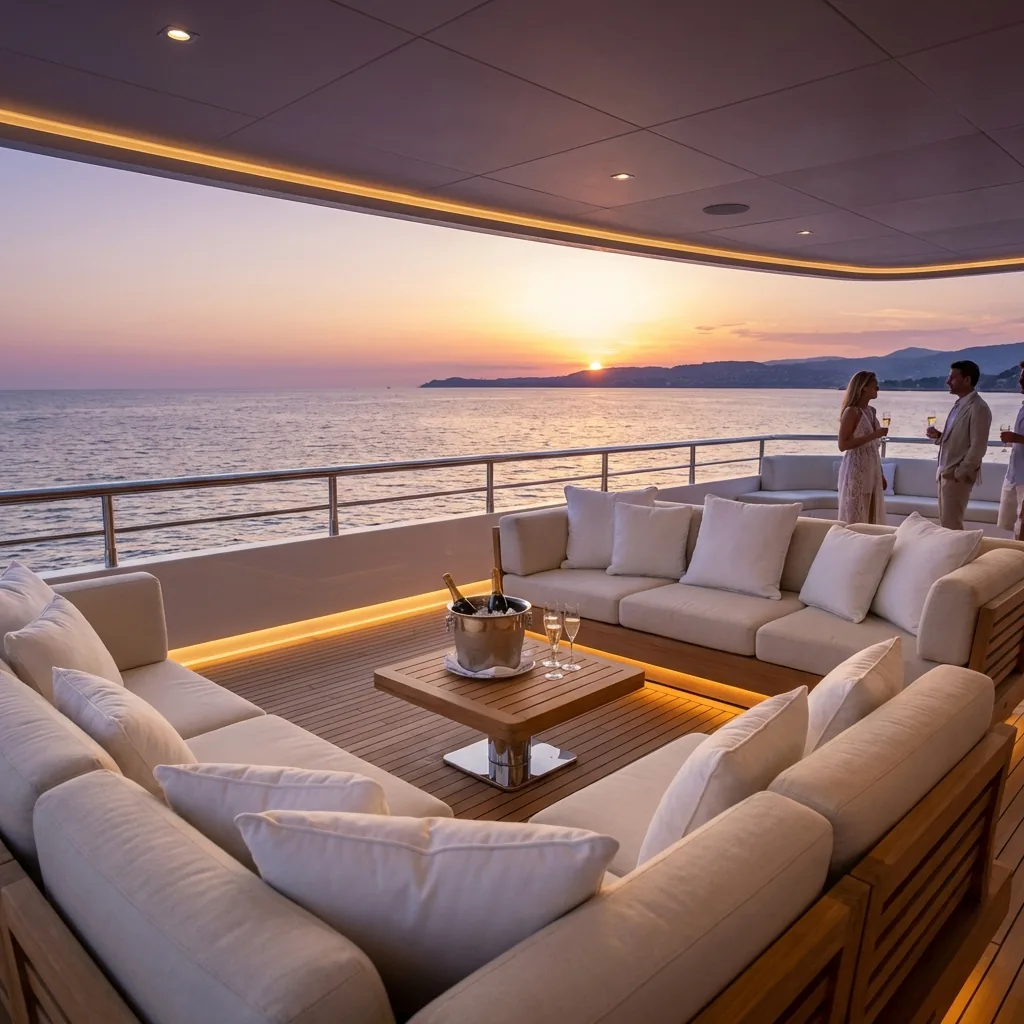
The Yacht Captain's Guide to Crew and Guest Wellness
For a yacht captain, the decision to bring a dedicated massage therapist onboard — whether for charter season, a transatlantic delivery, or the long Mediterranean summer with the owning family — sits at the intersection of crew management, guest service and medical prudence. It is a role with none of the clear precedent of steward or engineer, and captains who get it right treat it as a hybrid position: medical support, service crew, and household staff all at once.
This guide is written for captains and senior officers managing a superyacht's wellness function, either as an in-crew role or a placement through a firm such as Luxury Spa Therapists.
Why dedicated wellness onboard pays back
Charter guests on a 60-metre-plus yacht are paying for an experience that is expected to rival or surpass the finest land-based resorts. Spa treatment appointments at nearby marinas — whether in Saint-Tropez, Porto Cervo, or Cabo San Lucas — rarely meet the expectation for immediacy, privacy or flexibility. A dedicated onboard therapist changes the charter product fundamentally: treatments scheduled around the guest's rhythm, without tenders, without external appointments, without the privacy exposure of a shoreside visit.
For privately owned yachts with long cruising patterns, the case is different but no less compelling. Owning families with full-time land-based therapists increasingly expect continuity at sea. Rotational placements — the family's primary therapist joining the boat for three weeks at a time — maintain the same protocols across residence, villa and yacht, which matters more than any single technical skill.
Assessing the role: crew vs placement
The first decision is whether the therapist is a full member of the crew or a placement who sits outside the standard crew structure.
Integrated crew: the therapist is on the crew list, holds appropriate seafaring medical and STCW basic safety training, eats and accommodates in crew quarters, reports through the chief steward(ess), and is paid through the yacht's payroll. Most suitable for yachts operating a busy charter calendar where the therapist covers both guest treatments and routine crew wellness (back and shoulder work for deckhands, posture support for stewards, recovery sessions for the engineer's shift patterns).
Placed specialist: the therapist is introduced through a firm like ours, often for a specific season or itinerary, accommodated either in a guest-adjacent cabin or dedicated staff quarters, and reports directly to the captain or the guest's household team rather than into the crew chain. More common for owning families bringing their long-term therapist aboard for private cruising.
Both work; the choice should follow the yacht's primary use pattern, the owner's preference for continuity, and the complexity of the charter calendar.
Space and equipment
A dedicated treatment room is ideal but not always available. In its absence, a convertible space — a guest lounge, a beach club, an owner's gym with removable equipment — works well provided three criteria are met: acoustic privacy from adjacent cabins, temperature independence (the room needs to reach 22–24°C reliably without affecting adjacent spaces), and sufficient power for any heated equipment (hot stones, steamer, hydrocollators).
Treatment tables onboard deserve more thought than they usually receive. Fixed installations look clean but limit flexibility; folding professional-grade tables (Oakworks, Custom Craftworks) travel well and stow in standard lazarettes but require confirmed storage allocation during the build phase if one is being planned. For yachts operating in multiple hemispheres, duplicate equipment kept at owner's land-based homes and flown to meet the boat is often more practical than shipping linens and oils between legs.
Linens, oils and consumables follow the yacht's standard provisioning patterns but need explicit allocation in the budget. Organic, hypoallergenic oils are now the default expectation; the chief steward(ess) and the therapist should coordinate ordering so treatment supplies do not compete with housekeeping laundry.
The charter calendar
On a charter yacht, the therapist's schedule revolves around the guests' preferred rhythm, and that rhythm is almost never predictable. Experienced charter therapists adapt their working day to whatever the guest has scheduled — dawn treatments before a snorkeling trip, late-evening sessions after a beach dinner, quick recovery work between excursions.
Three logistical patterns recur across successful charter wellness operations:
Pre-charter briefing. The chief steward(ess) shares the charter agreement's wellness preferences (gathered at the time of booking) with the therapist before guest arrival. This allows the therapist to prepare specific oils, plan complementary treatments, and stock appropriate modalities — deep-tissue if athletic guests are expected, lymphatic and post-flight work for long-haul arrivals, prenatal massage for pregnant guests, etc.
Parallel calendar with the ship's program. Rather than guests booking treatments reactively, charter yachts increasingly publish a discrete wellness calendar at the start of the week, giving guests an easy way to plan — morning yoga at anchor, afternoon reflexology during the passage, couples sessions before the evening's ashore booking.
Crew wellness window. Set-aside crew treatment time during guest off-vessel hours (shore lunches, excursions) prevents crew treatments from being continuously displaced. Captains who protect this window see measurable improvements in crew retention through long charter seasons.
Medical and safety considerations
A therapist onboard sits in a useful middle space between the ship's medical arrangements and the guest's wellness expectations, but the boundaries matter. Treatment is not medical intervention. Contraindications (pregnancy complications, recent surgery, skin conditions, cardiac history) should be screened during initial consultation — a practice our vetted therapists bring as standard — and escalated to the ship's medical contact when relevant.
For offshore and long-passage work, the therapist should complete STCW basic safety training (personal survival techniques, fire fighting, first aid) even if placed rather than on crew. This is both a regulatory comfort and a genuine operational safety margin: a trained extra hand is never a liability.
Contracts, payment and continuity
Charter placements are typically structured as fixed-fee engagements with explicit per-week or per-charter rates, accommodation allowance (even when onboard), travel and visa coverage, and a clear clause for guest tipping policy. The guest's charter tip, when divided per standard maritime convention, should include the therapist. Clarifying this in the placement contract prevents uncomfortable end-of-charter conversations.
For long-term rotational placements with owning families, continuity is the operational prize. Families who place the same therapist through our 5-step process report that the therapist becomes a stabilising presence across the residence-villa-yacht circuit — someone who knows the family's protocols, preferences and medical history across seasons. This continuity is rarely available from marina-based spa bookings, and is the primary reason we see rotational placements growing fastest in the 50-to-80-metre owner-operated segment.
The captain's quiet role
Captains who manage wellness well share a consistent approach: they introduce the therapist to the guest or owner personally on arrival; they back the therapist's judgment on scheduling during conflicts; they defend the crew wellness window against well-meaning but chaotic guest requests; and they treat the therapist as a member of the service team whose craft deserves the same respect as the chef's. It is a small set of behaviours that, compounded over a season, turns wellness from an amenity into a differentiator.
If you are a captain or DPA planning a wellness capability for your operation — whether for an owning family or the charter market — we can arrange a confidential consultation to discuss placement options, crew integration models and seasonal rotation patterns.