The Moroccan Hammam Experience at Home
The Moroccan hammam is a centuries-old North African bathing ritual combining steam, black soap cleansing, vigorous exfoliation with a kessa glove, and rhassoul clay application — a full-body purification that has been practiced in communal bathhouses across Morocco for generations. Luxury Spa Therapists introduces therapists trained in authentic hammam technique who can recreate this transformative ritual within private residences and villas, where the treatment unfolds with the privacy and personalisation that communal settings cannot provide.
The traditional hammam was never merely about hygiene. It was a social and spiritual institution — a place where Moroccans gathered weekly to cleanse the body, mark life transitions, and restore inner quiet. Translating this ritual into a private home requires a therapist who understands the rhythm, sequencing, and cultural depth of the practice, and who can adapt hammam's physical demands to spaces not designed as bathhouses.
The Traditional Hammam Sequence
The authentic Moroccan hammam follows a precise sequence, each phase building on the last. Understanding this progression clarifies why the treatment produces results that no single exfoliation or steam session can replicate.
The ritual begins with fifteen to twenty minutes of steam exposure, softening the skin and opening pores. In a private setting, the therapist replicates this using a steam shower, heated bathroom, or outdoor wet area. Once the skin is prepared, the therapist applies savon noir — a dense, olive-based black soap left on for five to ten minutes to loosen dead cells and impurities through enzymatic action.
The heart of the hammam follows: the kessa glove exfoliation. Using a coarse-weave mitt, the therapist performs long, firm strokes across the entire body. Ribbons of dead skin lift visibly from the surface, revealing softer skin beneath. The technique requires precise pressure — too gentle and the skin does not release; too aggressive and the fresh layer becomes irritated. A therapist trained in authentic hammam knows exactly where this threshold lies.
After the kessa phase, the body is rinsed with warm water. Then comes rhassoul clay — a mineral-rich clay sourced exclusively from the Atlas Mountains — applied as a smooth paste across the body and, optionally, the face. It draws out remaining impurities and delivers silica, magnesium, and potassium directly to the newly exposed skin. After ten to fifteen minutes, the clay is rinsed away with progressively cooler water.
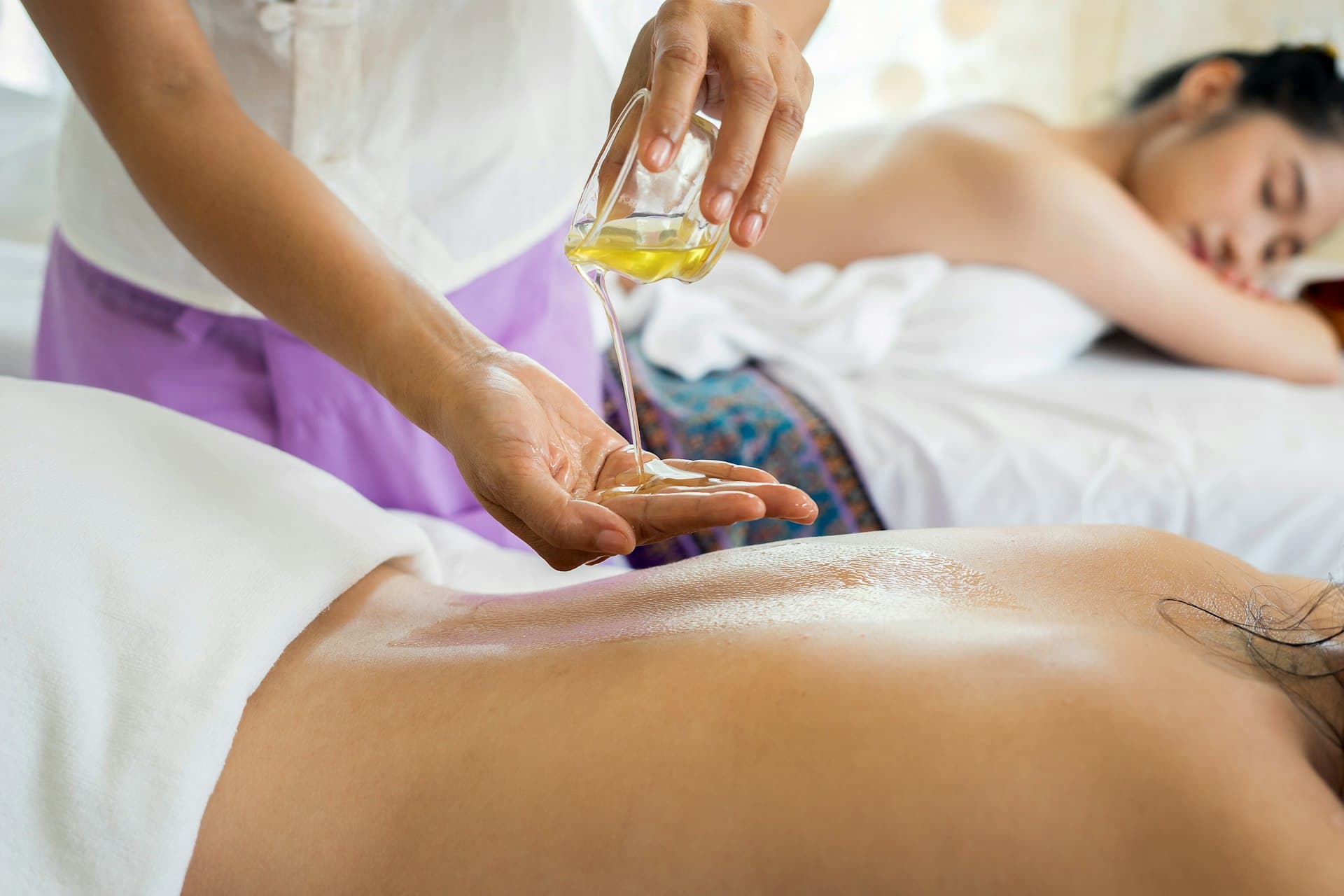
The final phase involves pure argan oil massaged into the skin while still slightly damp, sealing in moisture and imparting a subtle glow that lasts for days. Some therapists extend this into a brief relaxation massage, blending the hammam with elements of body treatment.
Adapting the Ritual to Private Homes
The hammam was designed for a specific architectural environment — tiled rooms with built-in benches, constant steam, and drainage channels in the floor. Recreating the treatment in a private home requires thoughtful adaptation, not compromise.
The most straightforward adaptation uses an existing wet room, walk-in shower, or spacious bathroom with a bench. The therapist brings all products and implements, manages water flow and temperature, and protects surrounding surfaces. Clients preparing a villa for seasonal wellness may designate a specific bathroom as a hammam space for the duration of their stay.
In Mediterranean and tropical settings, an outdoor shower area with privacy screening provides an exceptional alternative. Our outdoor treatment protocols address practical considerations — drainage, sun exposure, and wind — that determine viability. Properties with dedicated steam rooms offer the closest approximation to a traditional bathhouse, allowing the full temperature progression without improvisation.
Equipment and Product Requirements
Hammam is product-intensive, and the quality of materials directly affects the outcome.
Savon noir (black soap). Authentic Moroccan black soap is made from olive oil and macerated olives — dense, paste-like, with a rich earthy aroma. Commercial imitations containing synthetic surfactants lack the enzymatic action of genuine savon noir. Therapists in our network source from established Moroccan suppliers.
Kessa glove. A flat, rough-textured mitt — not a loofah or synthetic cloth. The weave creates specific friction to lift dead skin without tearing the fresh layer beneath. Gloves come in varying coarseness; the therapist selects the appropriate texture based on skin type.
Rhassoul clay. Genuine rhassoul is mined from a single deposit in the Middle Atlas Mountains. Its mineral composition — high silica and magnesium content — distinguishes it from bentonite or kaolin clays sometimes substituted in non-authentic treatments.
Argan oil. Cold-pressed, cosmetic-grade argan oil completes the ritual. Our guide to selecting the right massage oil explores how oil quality affects treatment outcomes; the same principles apply to argan oil selection for hammam.
The therapist arrives with all products, gloves, towels, and protective materials. This logistical thoroughness is part of what our selection standards evaluate — the ability to deliver a complex, wet treatment in a private environment without leaving any trace.
The Sensory Experience
Hammam engages every sense. The warm steam envelops the body before a hand is laid on the skin. The savon noir carries the scent of olives and eucalyptus — grounding, herbaceous, distinctly North African. The kessa scrub is vigorous, producing a sensation of deep cleansing that is physically unmistakable. The rhassoul clay cools and tightens as it dries. And the argan oil, applied at the end, feels like a reward — warm, silken, restorative.
For clients accustomed to gentler modalities, the hammam's assertive exfoliation can feel surprising. It is not painful, but it is direct. A hammam softened to the point of delicacy is no longer a hammam — it is a body scrub with Moroccan products. The therapists we introduce deliver the ritual with its traditional vigour intact, adjusted only for individual skin tolerance.
Who Benefits Most
Hammam suits a wide range of clients, but certain profiles benefit particularly.
Clients preparing for an event or season. The dramatic skin renewal produced by hammam makes it a natural choice before a holiday, charter, or celebration. Two to three sessions in the preceding week leave the skin visibly transformed. Combined with a facial treatment, the result is comprehensive.
Clients with dull or congested skin. Environmental exposure, travel, and product buildup leave skin looking flat. Hammam removes what daily cleansing cannot, resetting texture and tone. For clients managing the effects of frequent travel, hammam complements the recovery protocols in our guide to private residence wellness.
Clients seeking ritual over treatment. Some clients respond more deeply to treatments that carry cultural weight and ceremony. Hammam, with its centuries of practice and specific cultural context, offers this dimension. It is not simply something done to the body; it is a ritual one participates in.
Duration, Frequency, and Combinations
A complete hammam ritual takes sixty to ninety minutes. For ongoing placements, weekly sessions maintain the skin's clarity and softness. Twice-weekly sessions are appropriate during the first two weeks or preceding a specific event, tapering to weekly maintenance thereafter.
Hammam pairs effectively with several complementary modalities. Following a hammam with deep tissue massage the next day allows the therapist to work on freshly prepared skin with oil that absorbs more readily, deepening the massage's effect. Alternating hammam sessions with lymphatic drainage creates a rhythm of exfoliation and internal detoxification that many clients describe as transformative over a two-week cycle. For a villa placement spanning several weeks, integrating hammam into a broader programme alongside Balinese massage or other modalities produces a varied and deeply effective wellness experience.
Space Requirements and Practical Considerations
Before the first session, the therapist assesses the available space as part of how our process works. The essential requirements are a warm, enclosed space with running water, adequate drainage, and room for the client to sit or recline comfortably. A standard bathroom with a walk-in shower meets these requirements. A wet room exceeds them.
Temperature is the most important environmental factor — the room must remain above 30 degrees Celsius so the client stays comfortable while wet. In cooler climates, portable heaters or pre-heating the bathroom addresses this effectively. Water management is the primary logistical concern, and experienced hammam therapists handle rinsing, clay runoff, and floor safety seamlessly using protective sheeting and towels. Our therapist vetting process specifically evaluates the ability to manage complex treatments in private spaces without disruption.
Clients considering a trial session with hammam should communicate any skin sensitivities, allergies to olive-based products, or concerns about exfoliation intensity beforehand. The therapist adjusts kessa pressure, clay application time, and product selection accordingly.
To explore Moroccan hammam as part of your private wellness programme, inquire via WhatsApp or view our treatment expertise to see how hammam integrates with complementary therapies.
Frequently Asked Questions
What does a Moroccan hammam involve, and how long does it take?
A complete hammam follows a five-phase sequence: steam preparation, black soap application, kessa glove exfoliation, rhassoul clay mask, and argan oil finishing. The full ritual takes sixty to ninety minutes. Each phase builds on the last — steam softens the skin for the soap, the soap prepares it for the kessa, and the clay purifies what the exfoliation has revealed.
Can a hammam be performed in a standard bathroom?
Yes. While the traditional hammam takes place in a purpose-built tiled room, a private bathroom with a walk-in shower or bathtub provides a suitable environment. The therapist manages temperature with pre-heating, brings all products and protective materials, and handles water containment. Properties with wet rooms or steam showers offer the closest experience to a traditional bathhouse. Our team assesses the space during the consultation process and advises on any adjustments.
Is the kessa exfoliation painful?
The kessa phase is vigorous — more assertive than a typical body scrub — but it should not be painful. The therapist adjusts pressure based on skin type, using a finer-weave glove for sensitive skin and a coarser texture for resilient skin. The black soap preparation ensures dead skin lifts easily, reducing friction required. First-time clients are often surprised by the visible results but report the sensation as invigorating rather than uncomfortable.
How often should hammam treatments be scheduled?
Weekly sessions maintain optimal skin clarity. During the first two weeks or before a significant event, twice-weekly sessions accelerate results. Hammam's effects are additive — each session builds on the last, progressively improving tone, texture, and resilience. Your therapist will recommend a frequency based on your skin's response and your broader wellness programme.
What products are used, and are they safe for sensitive skin?
Authentic hammam uses four primary products: savon noir, a kessa glove, rhassoul clay, and cold-pressed argan oil. All are natural and have been used for centuries. Clients with olive allergies, reactive skin, or conditions such as eczema should inform the therapist during the pre-session consultation. Product substitutions are available without compromising the ritual's integrity. Our selection standards require thorough pre-treatment assessments.
Can hammam be combined with massage on the same day?
Hammam followed by massage is possible but requires sequencing. The hammam should precede the massage by at least thirty minutes. A gentle modality such as Balinese massage pairs well, as freshly exfoliated skin absorbs oil more effectively. More intensive modalities such as deep tissue massage are better scheduled for the following day, allowing the skin to recover from the kessa exfoliation before sustained deep pressure is applied.
How does the therapist protect my bathroom during the treatment?
Experienced hammam therapists arrive with protective sheeting, towels, and containment systems for wet treatments in private homes. All exposed surfaces are protected before the session begins, and the therapist restores the space to its original condition afterward. This logistical discipline is evaluated during our therapist vetting process.
For a confidential consultation about hammam treatments in your home, contact us or connect via WhatsApp at +9613880808.
Explore your options with us to bring the hammam tradition into your private wellness routine.